Radical relatedness by Dr Britta Boyer
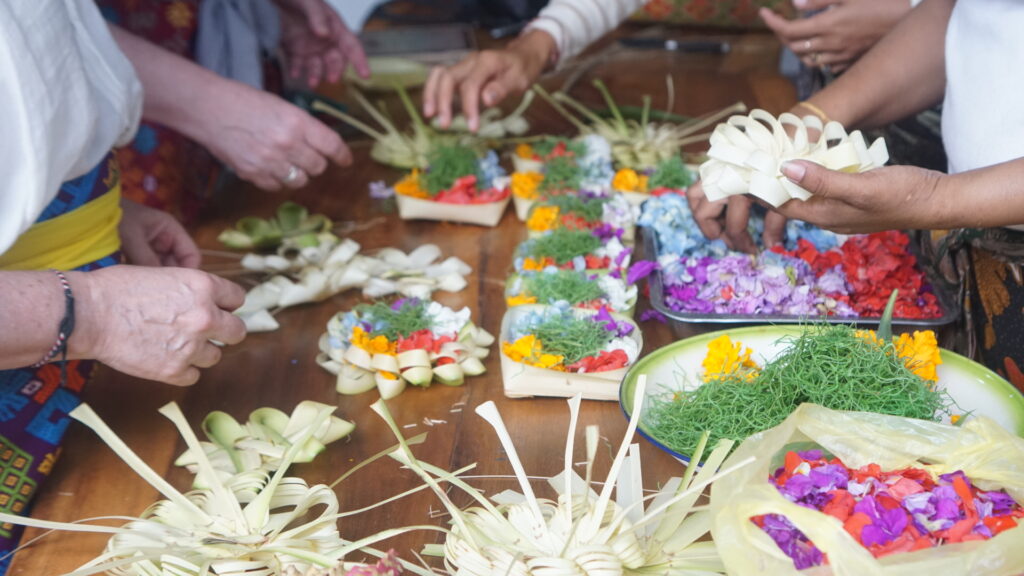
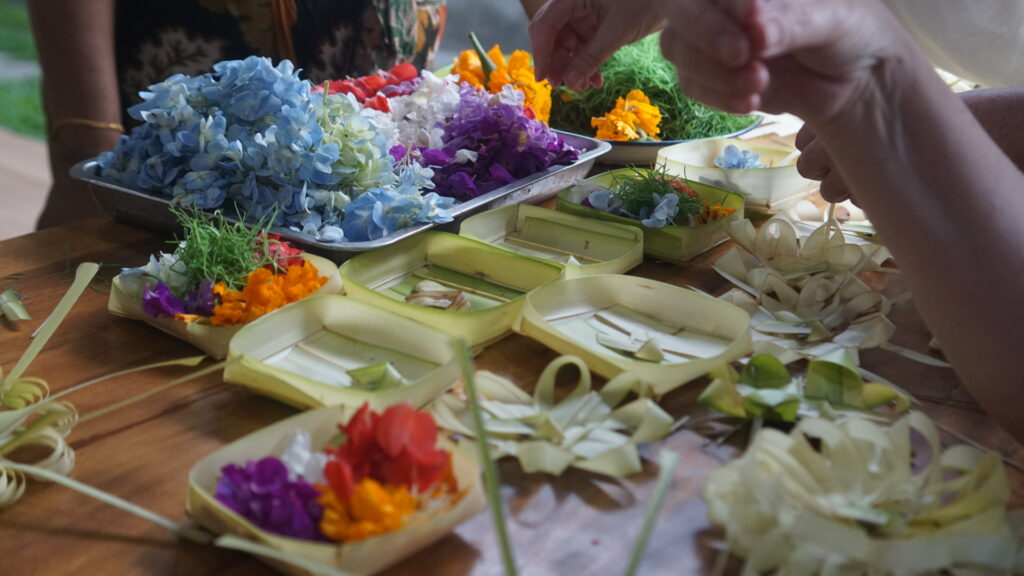
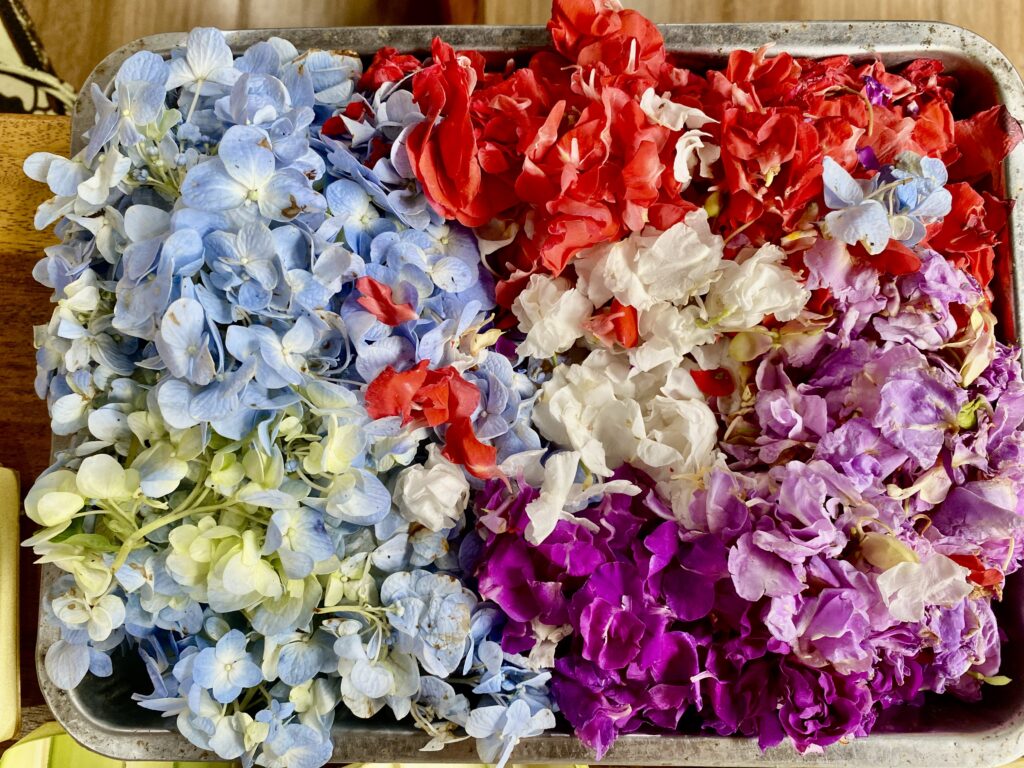
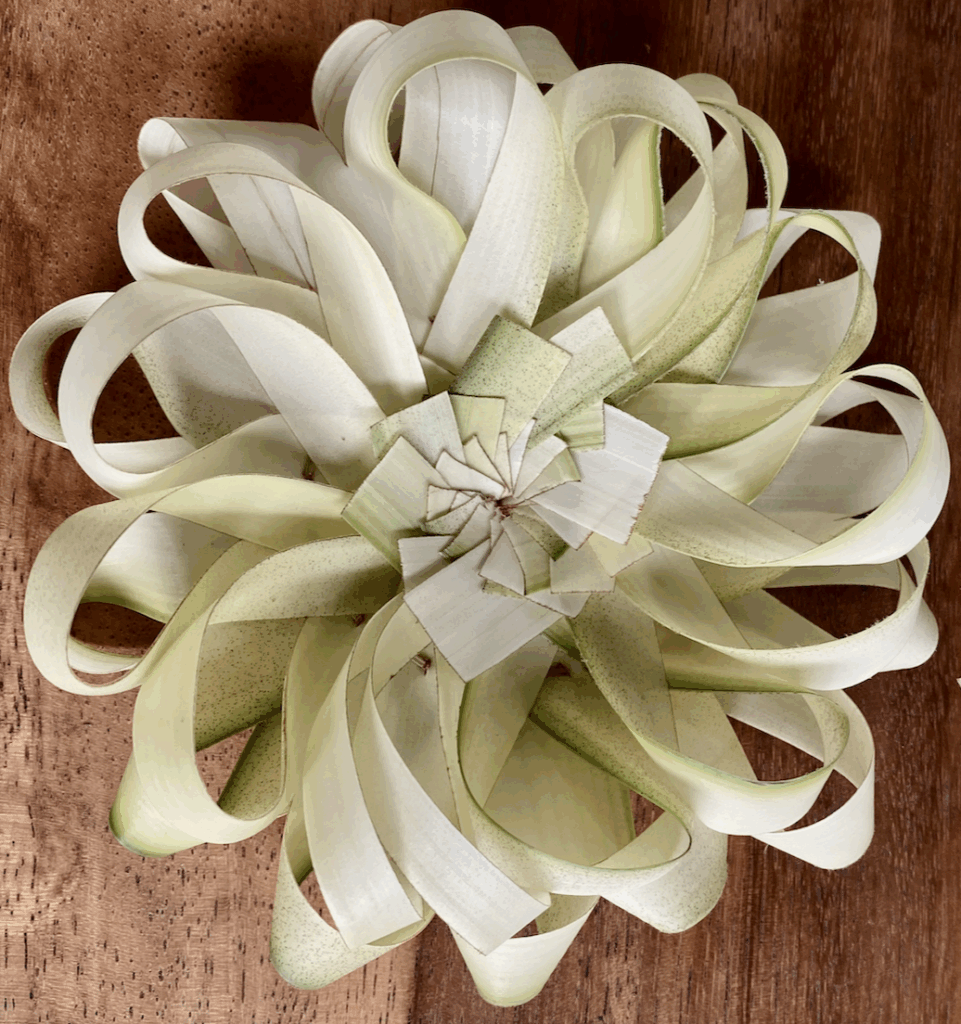
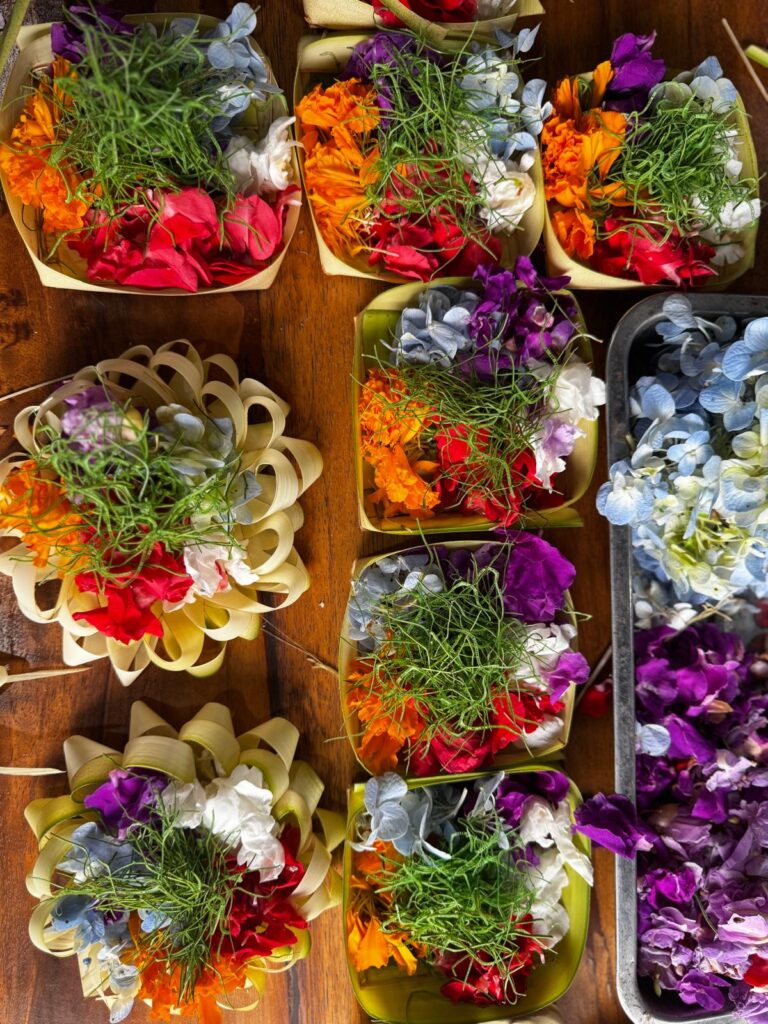
The Kinship Through Rice project began with embodied fieldwork participating in daily life, making canang (Balinese offerings) with our own hands, experiencing rice cultivation rhythms, and learning the ritual practices of offering to Dewi Sri (Rice Goddess).
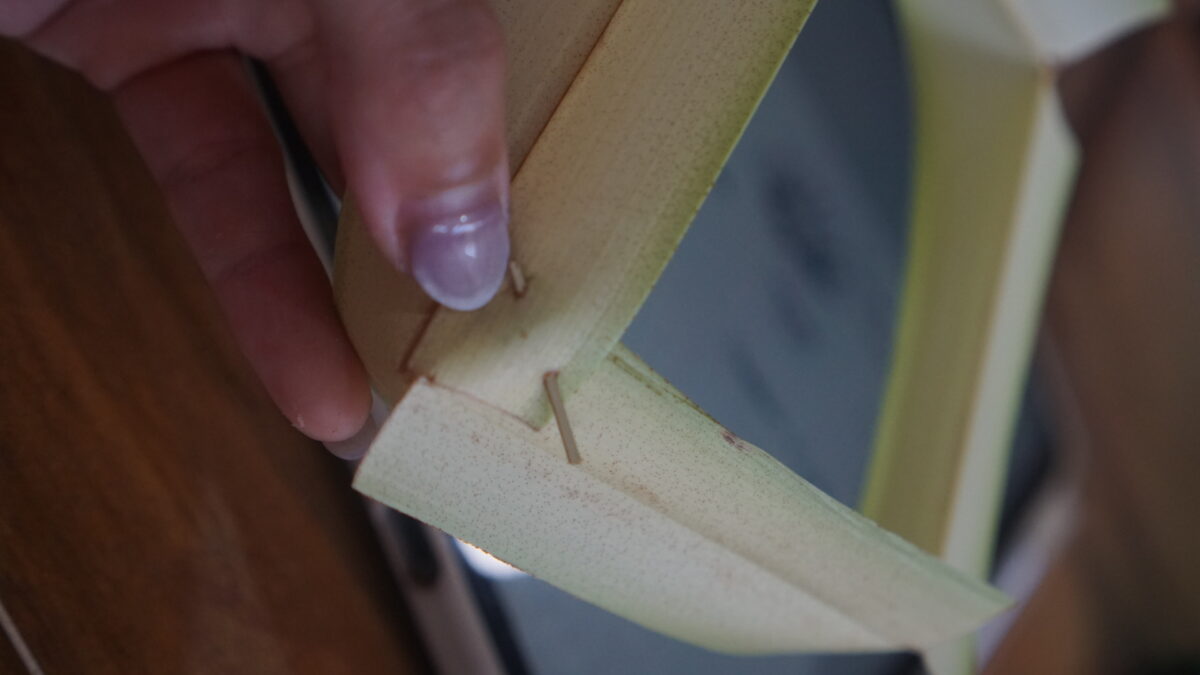
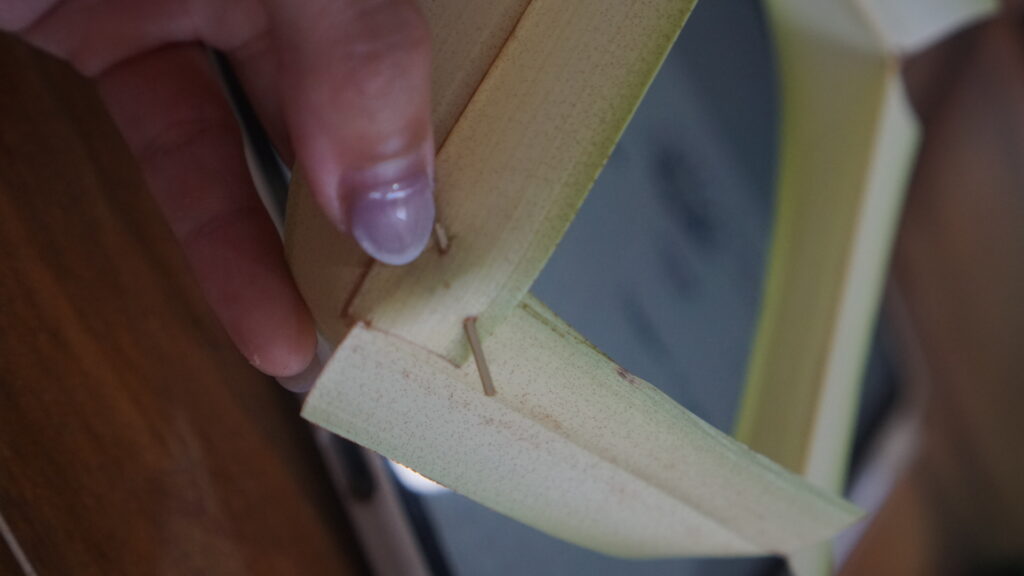
Canang became our method through practice, not observation. Our entire bodies became sites of design inquiry, but it was our kuku (fingernails) that mattered most. The meticulous work of folding palm leaves, arranging flowers with precision, pinning offerings at exact angles without breaking the wooden sticks prepped for us. So much skilled labour lives in women’s fingernails. What took us hours to fumble through, Balinese women accomplish with swift, practiced movements. Their knowledge resides not in their heads to be interviewed, but in their fingertips, accumulated through years of daily practice. We had to learn with our kuku before we could understand anything about offerings, rice, or sacred labour.
This approach reflects what design theorist Suzi Gablik calls ‘radical relatedness’ moving beyond the Western notion of self as private and separate from the world, to one that includes more of the environment, where social interactions have healing potential. Design here is ontological, it’s about transformation of being, not just making of things. When you make offerings daily, folding palm leaves, arranging flowers, selecting incense, you engage in what we call high-touch practices: using hands, senses, and intuition to bring revelatory environmental awareness (Boyer et al, 2021). Through making’s entanglements, you learn how to act through your own two hands, not through imposed frameworks, and you feel things analytical tools can never reveal such as the skill and precision required, the hours it takes, the beauty of devotion, the weight of obligation. Most important, we learned who carries the labor of sacred practice, who maintains the cosmic balance, expresses gratitude, connects to ancestors and gods.
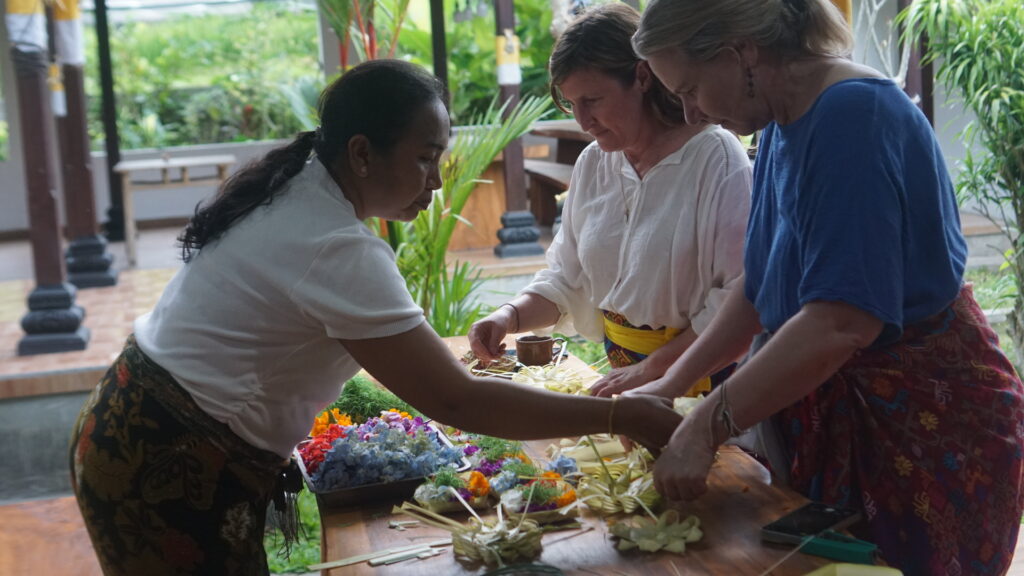
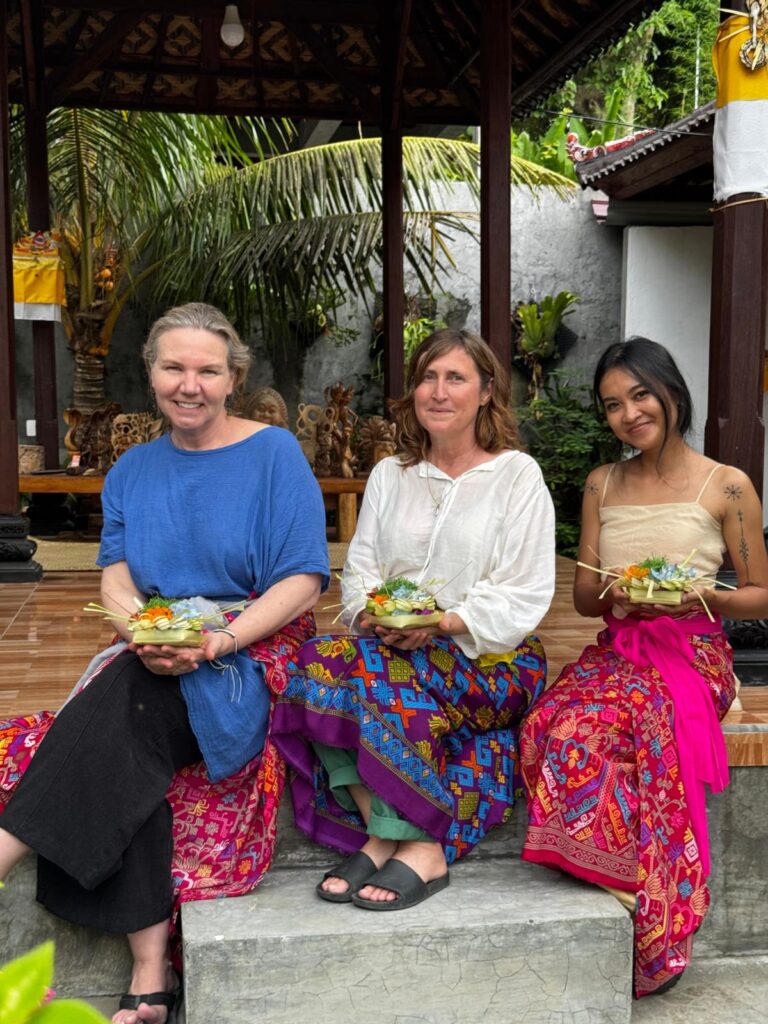
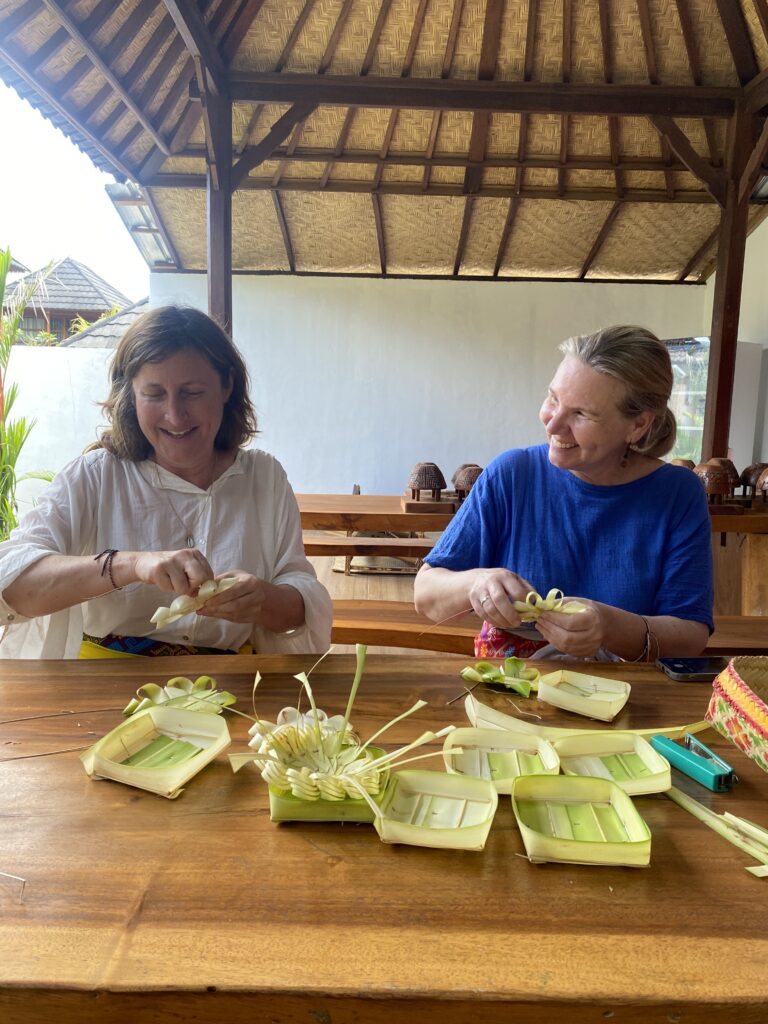
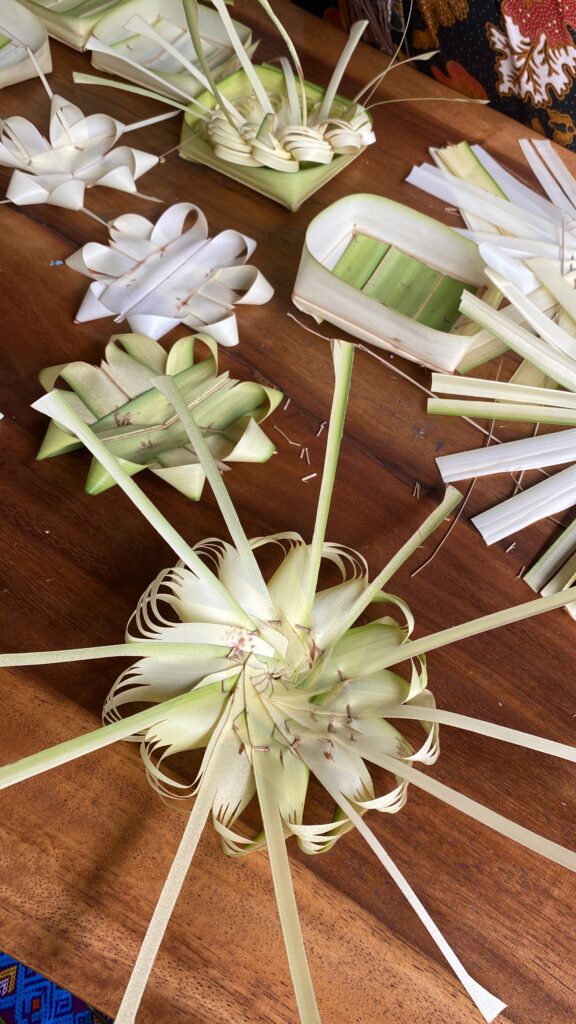
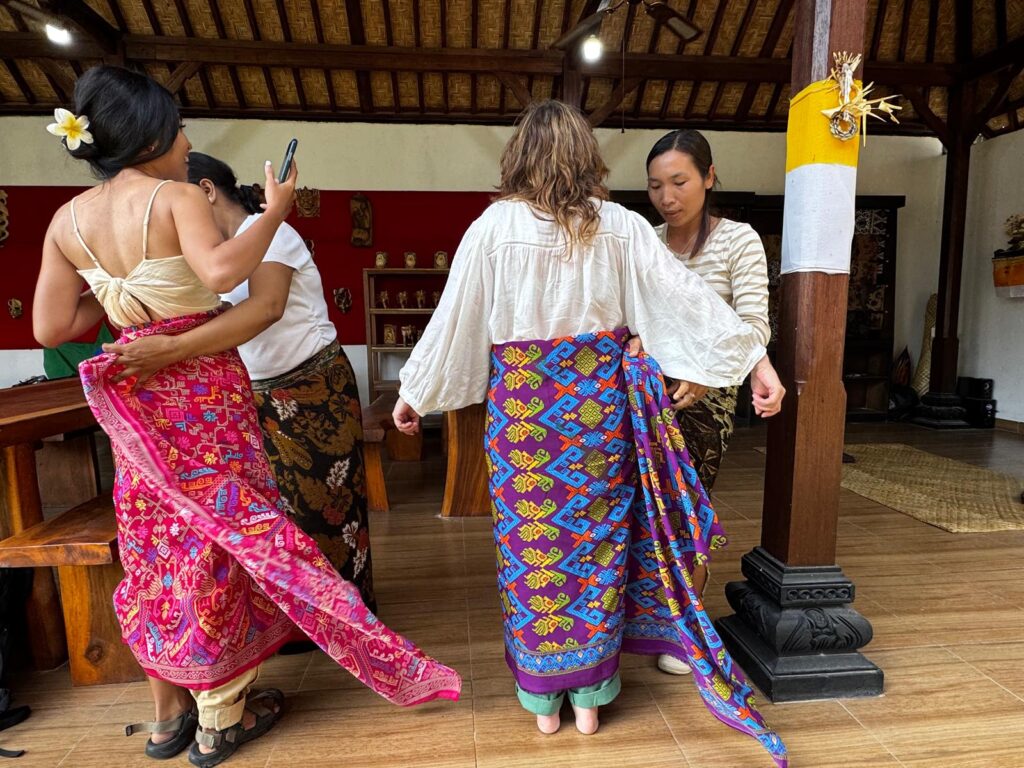
As design researchers, we cannot romanticise what we’ve embodied. We cannot celebrate beautiful offerings without acknowledging the exploitation and burden that ceremony and ever increasing tourism imposes on women. In holding this contradiction through the relational webs of participation, we come to understand the systems of excess, gender inequality, and inescapable capitalism reach even into offerings to the gods.
So what does canang as method teach an international design researcher?
Reciprocity is cultural obligation, not a transaction. It’s not something to be understood through a 20-minute empathy exercise. You must feel it viscerally, in your hands, with your kuku (fingernail), in your time, in your body’s frustration and care.
Balinese women’s knowledge systems such as how to make offerings, how to work with rice, how to maintain cosmic balance, cannot be studied from outside. Your body must become the site of inquiry. Experience must become your teacher. This is the only path from separate consciousness to radical relatedness.
And here’s what this means for regenerative design practice:
Proximity and embodiment aren’t optional, they are the ethical foundation that you learn through the directional precision of canang.
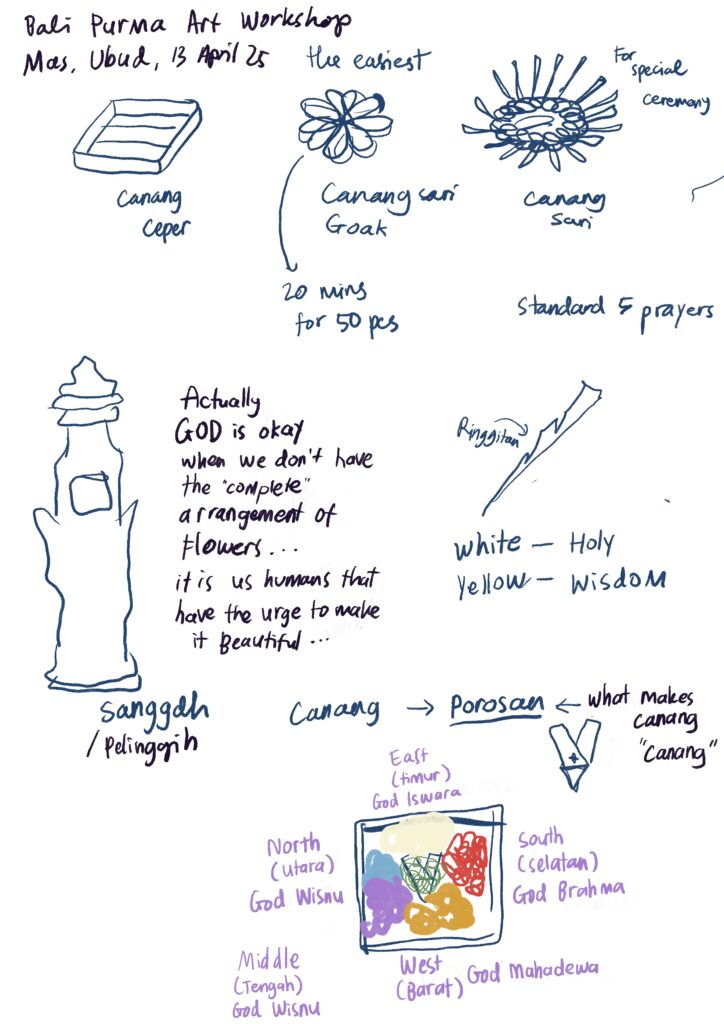
Explanation of Gaby’s fieldnotes:
Each direction, each colour, each deity must be honoured in proper position and correct cosmological placement.
East gets white (God Iswara). South gets red (God Brahma). West gets yellow (God Mahadewa). North gets blue or purple (God Wisnu). The centre also honors God Wisnu.