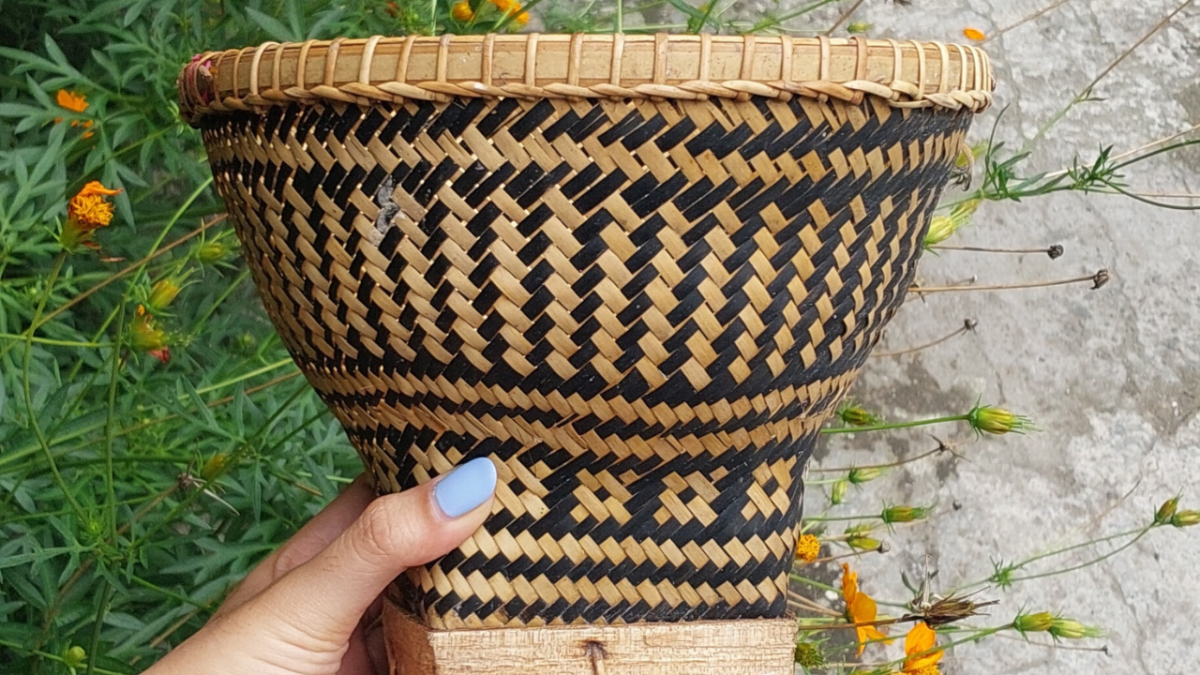
CONTRIBUTION FROM WANDA WIDIYAWATI
Boboko is a tool used for washing or cleaning rice, and it can also function as a rice container. It is made from split bamboo that is tightly woven. Its shape is round and slightly convex, with four square-shaped legs called soko. The outer edge of the container is reinforced with wengku, a type of bamboo rope wrapping.
Our ancestors possessed remarkable knowledge, as shown by their ability to create tools that supported their daily activities. At that time, weaving techniques had begun to develop, where materials such as leaves, bamboo, tree bark, and other sheet-like items were interlaced to form various useful objects.
In Sundanese society, boboko is also used to store food items that will be sent to neighbors or relatives.
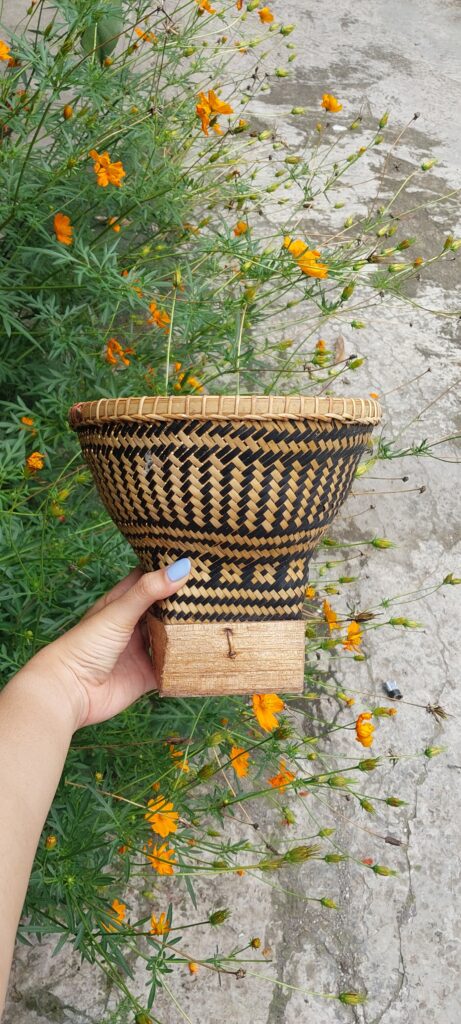
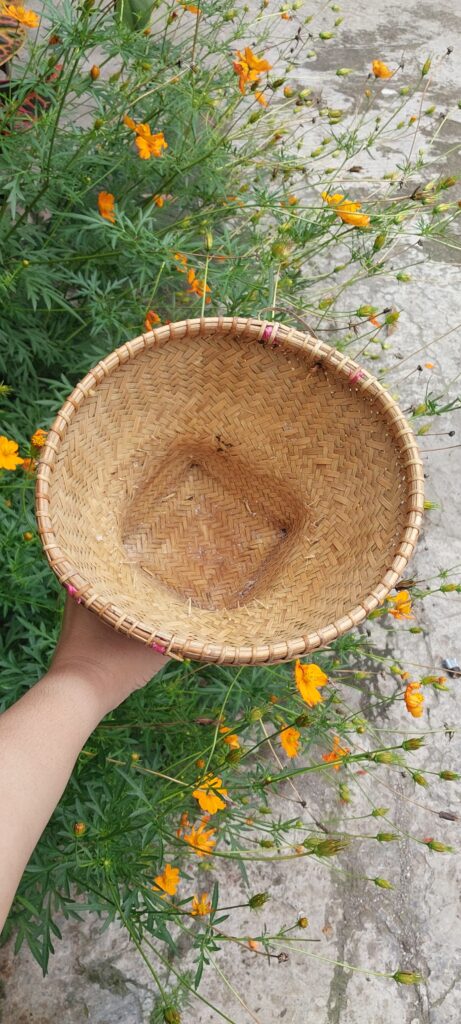
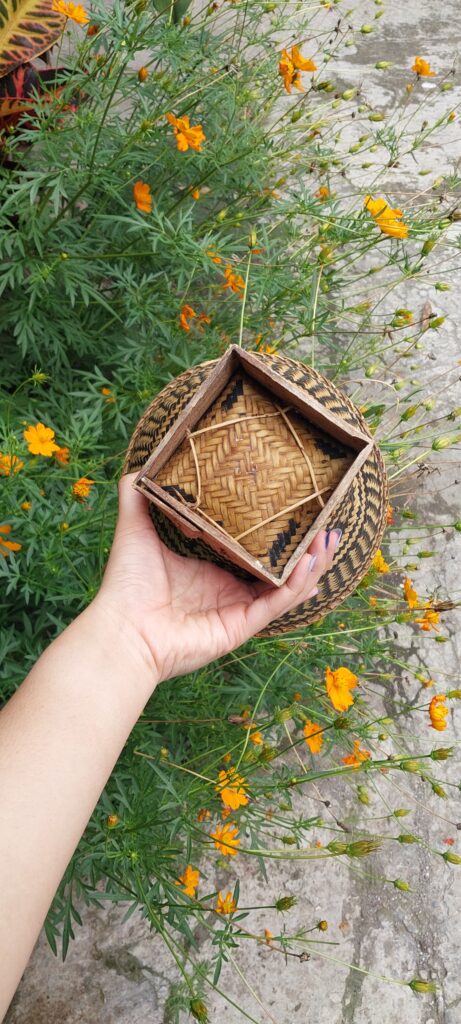
Boboko, known in Indonesian as a rice basket, has many functions. Besides being a household utensil, it serves as a place to store rice, a container to wash rice before cooking, and a storage for various kinds of food.
The process of making a boboko from bamboo is quite long and involves several steps. Generally, the bamboo is cut by segments and its nodes are removed. It is then split into sheets; the innermost part is used later for the boboko’s legs. The bamboo sheets are dried under the sun, then split again into strips around 0.5 cm wide, and woven. The upper part of the boboko is reinforced with a circular bamboo ring, while the bottom is fitted with legs made from the inner part of the bamboo. After all these steps, the boboko or rice basket is ready to use.
Boboko or the rice basket is just one of many traditional ornaments from the Sundanese region in Indonesia that have proven to be highly useful in daily life. Therefore, we should continue to preserve all traditional crafts from various regions across Indonesia.
Source: https://budaya-indonesia.org/Boboko-Bakul-Nasi
artisan canang as method colour cooking utensil cultural probes culture Dewi Sri elders farmers fieldwork food aesthetics ITB students living systems framework Making kin nasi padang plants prototypes rats regenerative design Relational knowledge rice Rice godess rice husk rice relations rice straw soil as method soil life subak tiny beings warm data weaving women