Contribution from M. Fata Habibullah and Wanda Widiyawati
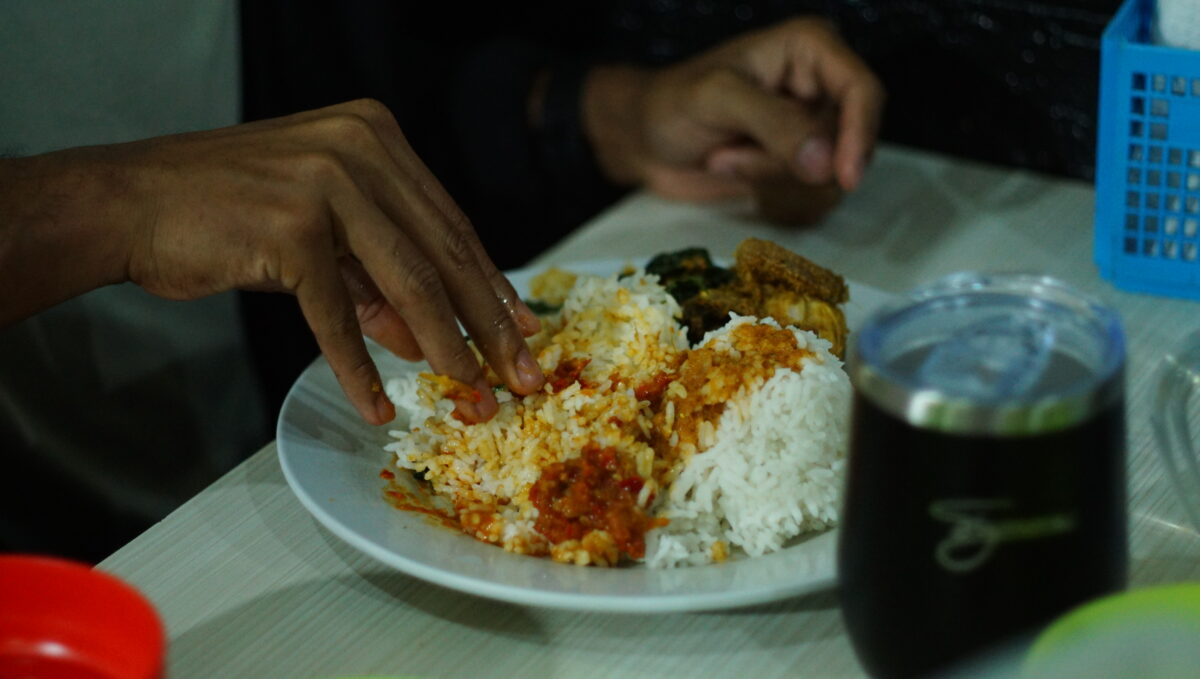
The deeply rooted custom of eating with one’s hands in Indonesian culture is a heritage that deserves preservation. Even the arrival of spoons and forks brought by European traders to Southeast Asia, particularly to Indonesia, has not been able to replace this tradition.
According to Prof. Dr. Ir. Murdijati Gardjito, a food science expert from Gadjah Mada University, eating with hands is an authentic Indonesian practice closely tied to the long-standing tradition of consuming food wrapped in banana leaves.
“In both Sumatra and Java, people traditionally eat using their fingers, all ten of them. This practice is strongly connected to the tradition of eating rice wrapped in banana leaves”
(she explained during a phone interview with xx)
She added that many dishes are still best enjoyed by hand today. Spoons and forks themselves were foreign utensils introduced by European traders and colonisers to Southeast Asia, especially the Indonesian archipelago. The word garpu (fork) even comes from the Portuguese word garfo, which was likely introduced around the 16th century when Europeans came in search of spices.
In Eastern Indonesia, where tuber-based foods are widely consumed, many dishes are also considered more delicious when eaten by hand. However, not all foods were traditionally eaten this way. Before the arrival of spoons, liquid-based dishes, such as nasi liwet from Solo or porridge, were often enjoyed using suru, a spoon made from banana leaves.
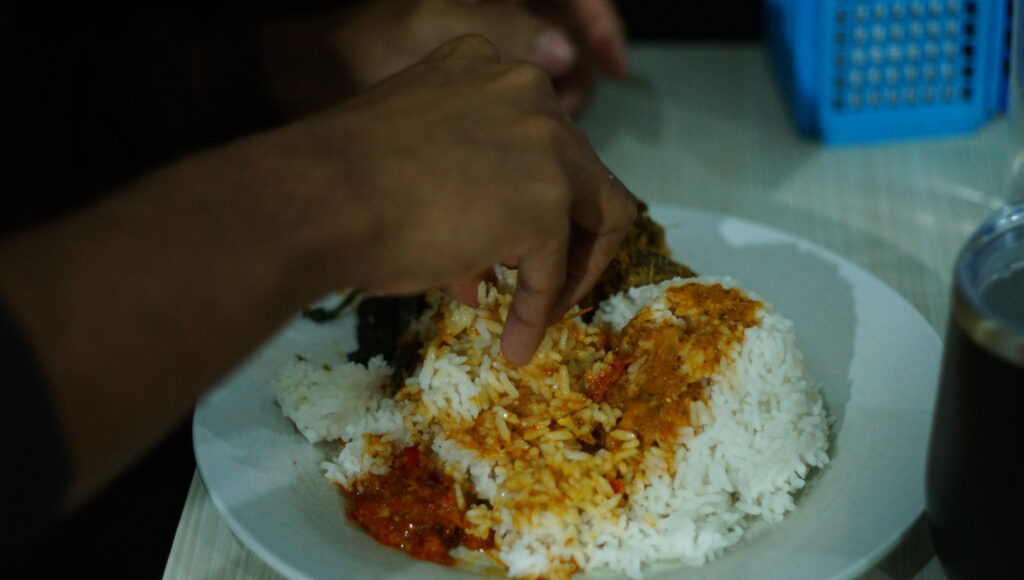
Eating Padang-style rice with your hands allows the elements of the meal to blend more naturally, enhancing flavor combinations and honoring the texture of the food.
Hands act as an emotional bridge during meals, creating a fuller, more mindful, intimate, and personal eating experience. They also help you better sense the texture of the food, enriching the overall dining experience and adding warmth to the act of eating.
Despite the introduction of modern utensils, they have never fully replaced Indonesia’s original eating tradition. Instead, hands and utensils now coexist harmoniously, offering complementary ways to enjoy a meal.