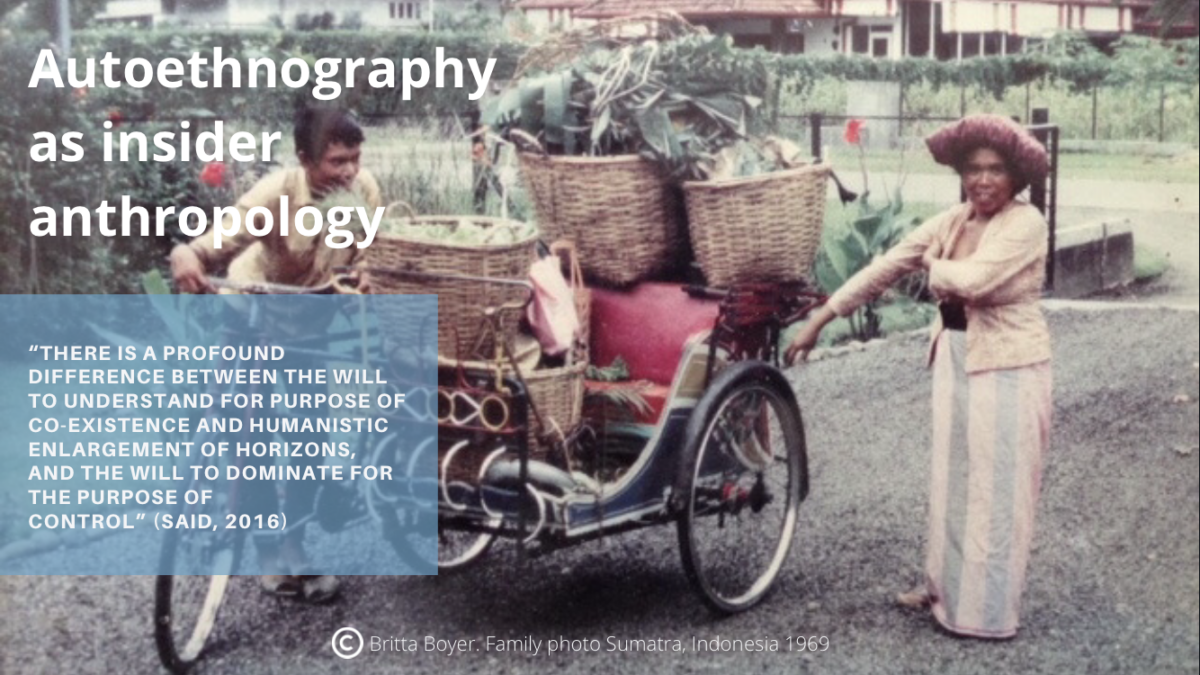
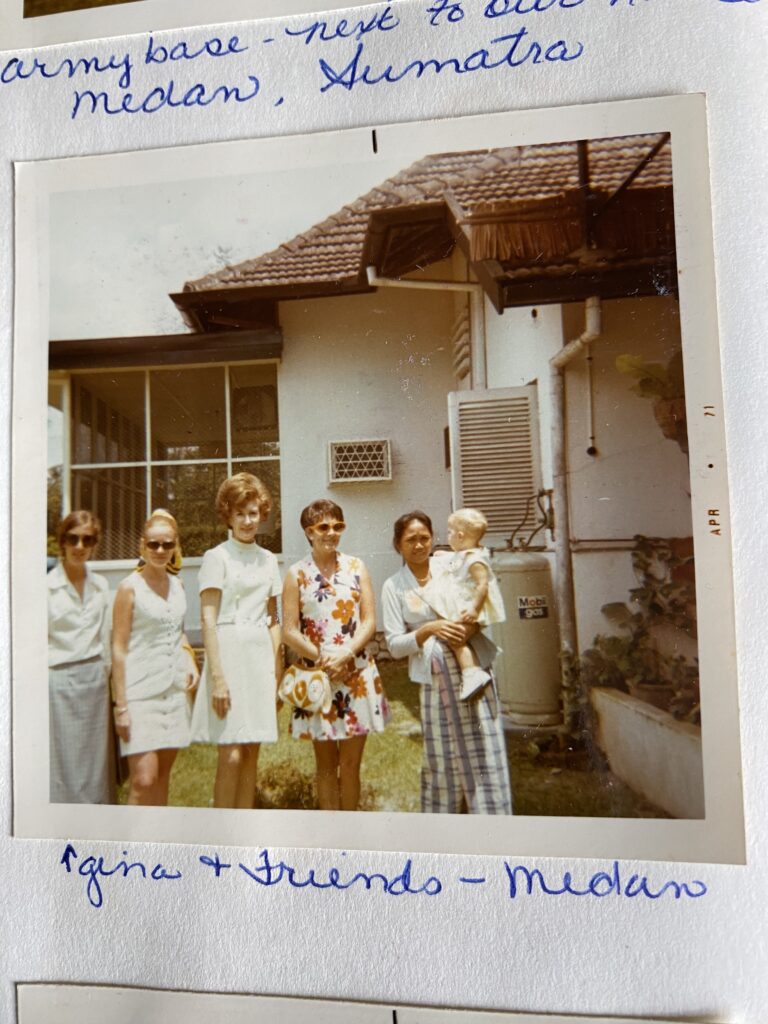
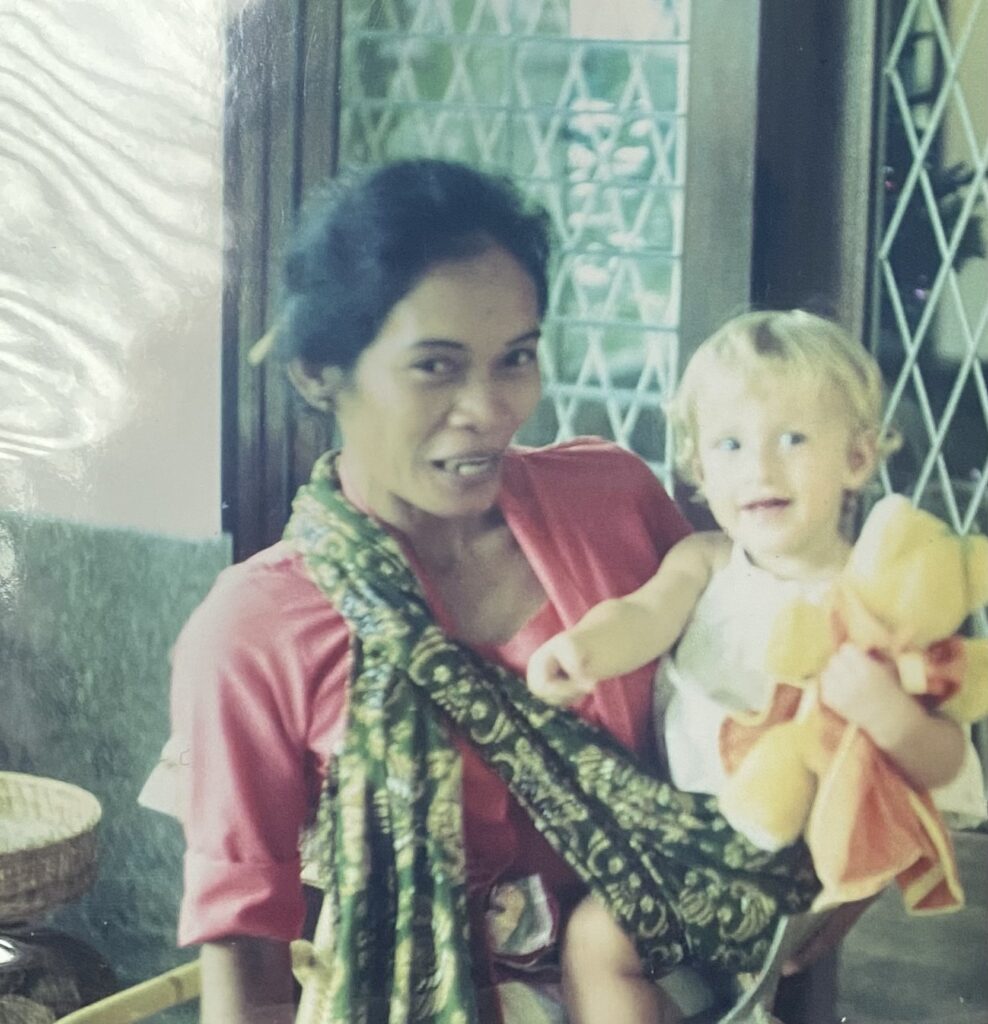
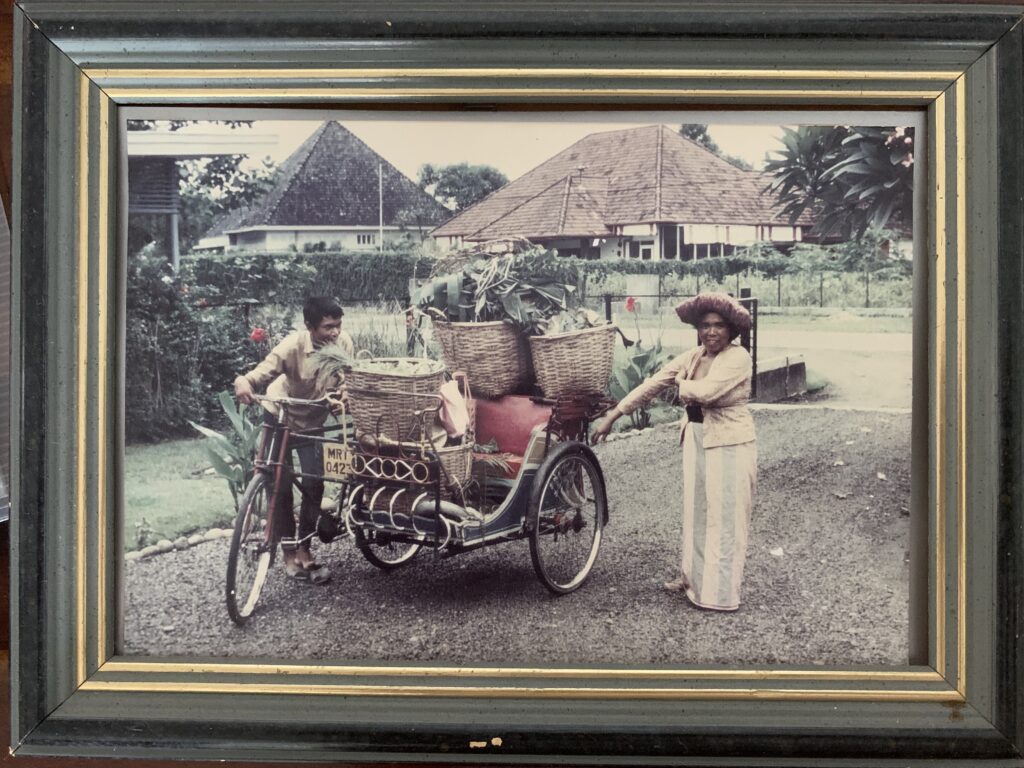
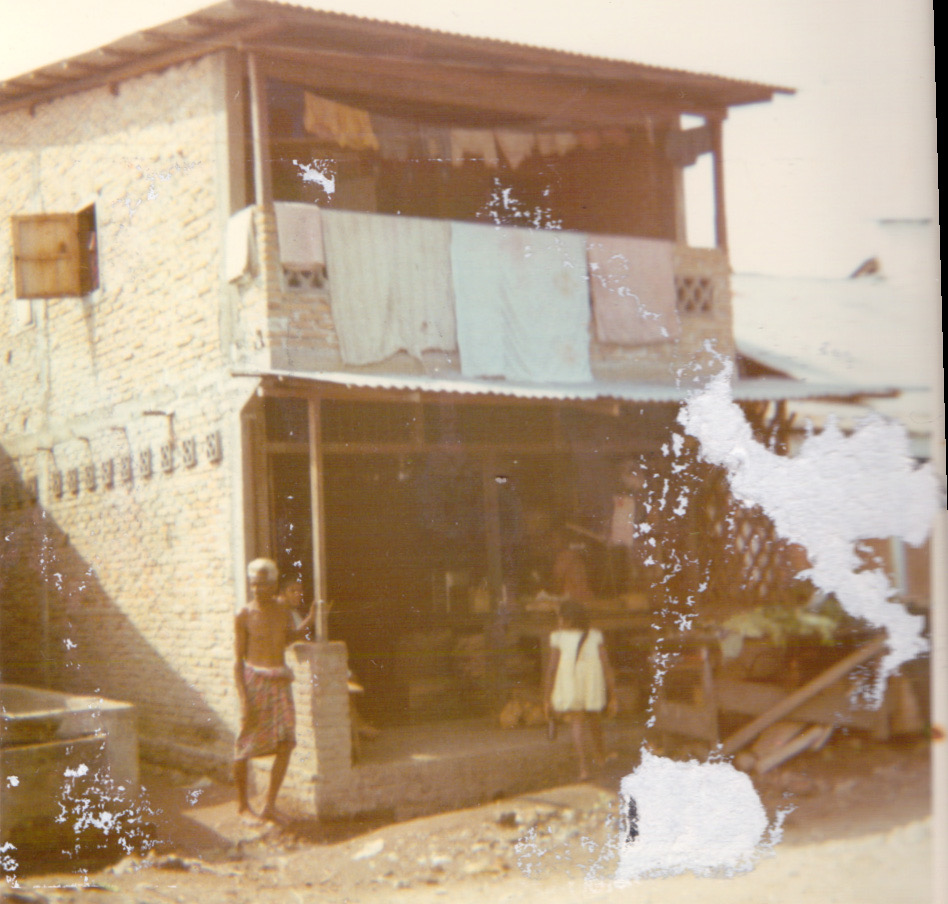
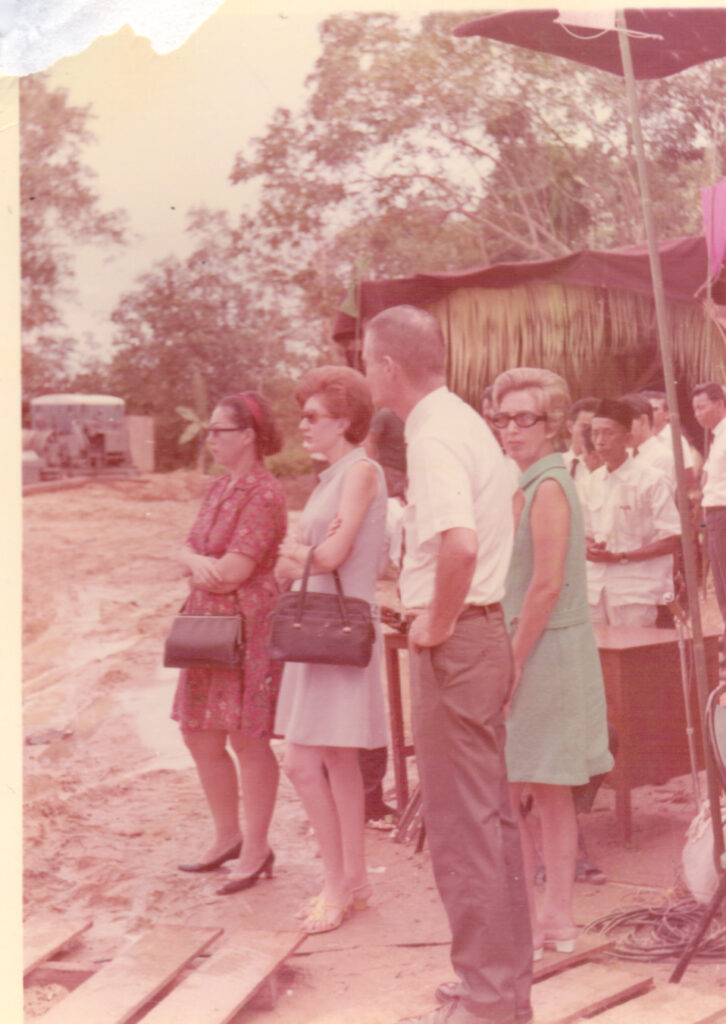
My relationship with Indonesia is not incidental to this research; it is constitutive of it. Our collective comes to this project through a long, entangled history of living, working, and forming kinship across Indonesian contexts. My own geopolitic history and relationship began when our family first lived in Sumatra in the late 1960s as part of an oil family embedded within extractive infrastructures that shaped land, labour, and social relations. Decades later, I returned as a designer, working within the global fashion industry for nearly two decades, forming familial, professional, and scholarly ties, including raising a child within an Indonesian family network. These extended, discontinuous yet enduring relationships have produced not simply cultural familiarity, but embodied knowledge shaped by duration, care, and accountability. Kinship Through Rice emerges from this shared position, not as an external investigation, but as research grown from lived relations and a journey or reparation.


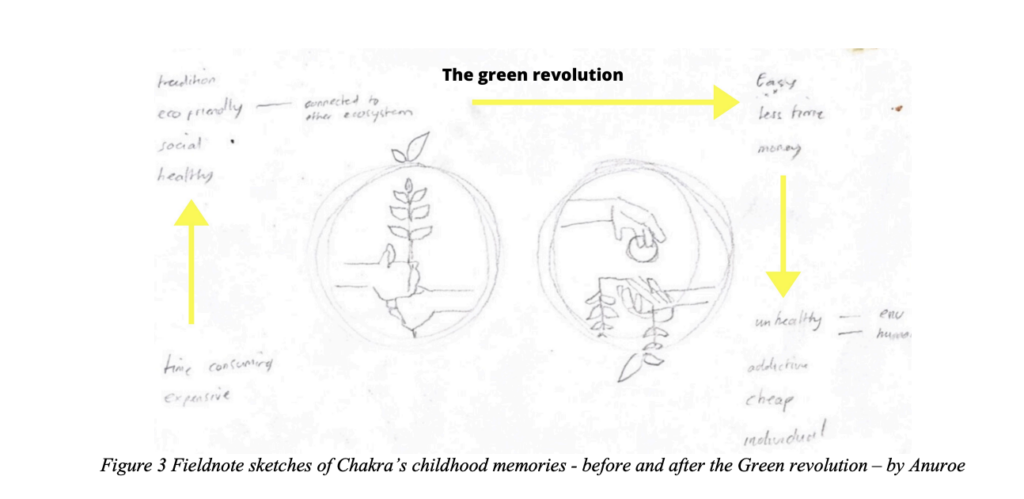
In this project, rice operates not as metaphor alone but as a relational system: agricultural, cultural, cosmological, and political. As a staple crop, rice structures everyday life, labor rhythms, land stewardship, and intergenerational knowledge across Indonesia. As a colonial and postcolonial commodity, it has also been shaped by extractive governance, modernisation regimes, and development interventions, such as the Green Revolution [depicted in Anuroe’s drawings below] that have disrupted Indigenous and local ecologies. Working collaboratively with Indonesian academics, farmers, and cultural practitioners, we approach rice as a site of kinship, linking humans, soils, waters, rituals, and temporalities. Kinship here translates as a collaboration grounded in reciprocal inquiry and a commitment to mutual accountability.
Our collective understanding of sustainability is that it cannot be achieved through technical fixes, universal metrics, or externally imposed design solutions. Instead, sustainability emerges through relational attunement to place, history, and power; a human history is “a story of power struggle…[including] resources that others depend on, such as wheat and rice that most people eat every day (Kemp, 2025)1. This attunement is cultivated over time through lived experience, intimacy, and often contradiction, rather than through formalised training alone.
And for me personally, having lived within and against extractive systems, from oil economies to global fashion supply chains, I draw on the concept of aesthetic-cultural proprioception [journal article currently being developed to explain this more deeply] to describe the embodied capacities through which transnational designers and scholars sense and navigate complex material–semiotic assemblages. These capacities are evident in the work of transnational practitioners whose knowledge is frequently positioned as “local,” applied, or supplementary within global sustainability discourse. I would argue instead that such practitioners possess advanced forms of intercultural and ecological expertise, developed through lived negotiation rather than institutional abstraction.
Kinship Through Rice therefore positions sustainability as a relational, embodied practice, making at it’s centre, and design research as a process of ongoing attunement rather than problem-solving. By centring rice as a living archive of colonial disruption and ongoing resilience, and by foregrounding collaboration with Indonesian academics as co-researchers and co-theorists, this project challenges dominant narratives of sustainable innovation. We argue for a reorientation of design research and education, one that recognises unsettlement as a necessary condition for learning, understands designing as a worldview rather than a toolset, and positions decolonial practice not as an optional framework, but as foundational to sustainable futures.
artisan canang as method colour cooking utensil cultural probes culture Dewi Sri elders farmers fieldwork food aesthetics ITB students living systems framework Making kin nasi padang plants prototypes rats regenerative design Relational knowledge rice Rice godess rice husk rice relations rice straw soil as method soil life subak tiny beings warm data weaving women