Foreword by Dr Britta Boyer
‘All flourishing is mutual‘ – Robin Wall Kimmerer
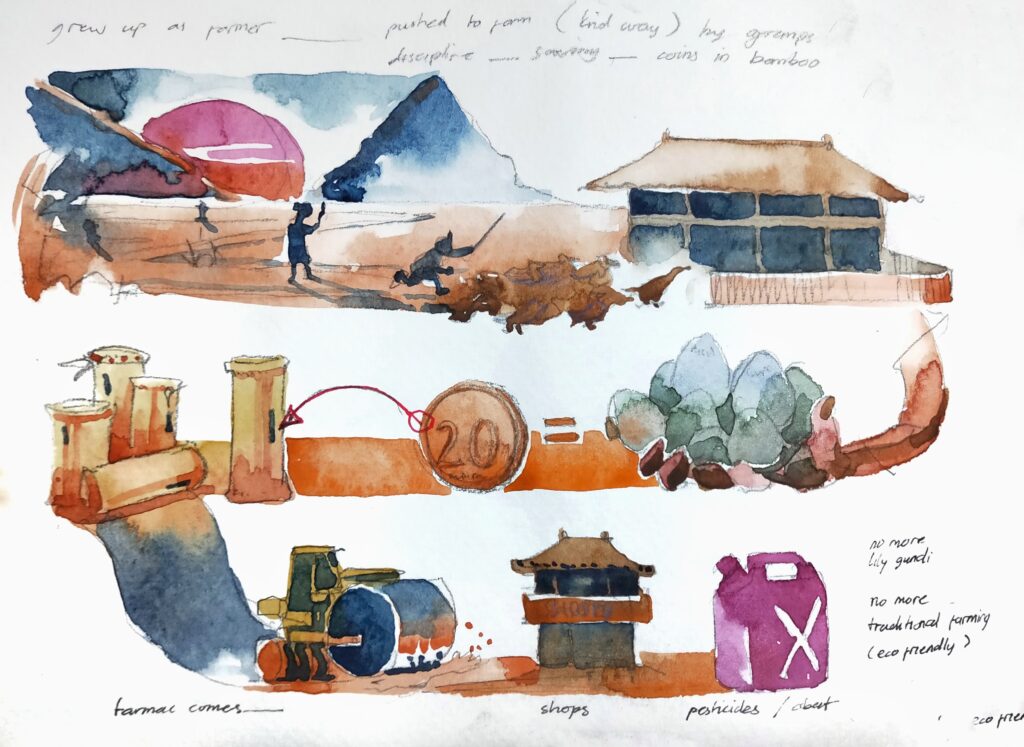
Rice feeds half the world’s population daily, yet its cultivation has become a flashpoint for climate and air quality crises. The international community is witnessing in real-time the consequences of abandoning traditional ecological knowledge for short-term economic gains. Post-harvest rice stubble burning, practiced across Asia, from Indonesia to India, releases massive quantities of CO₂, methane, and black carbon into the atmosphere. In Indonesia alone, 12,000-15,000 million tonnes of rice straw are burned annually, creating toxic air quality events that affect millions and is accelerating climate change.
What happens in rice terraces around the globe matters far beyond their regions: the UK alone imports approximately 500,000 tonnes of rice annually from these burning zones, directly linking Western consumption to atmospheric harm.
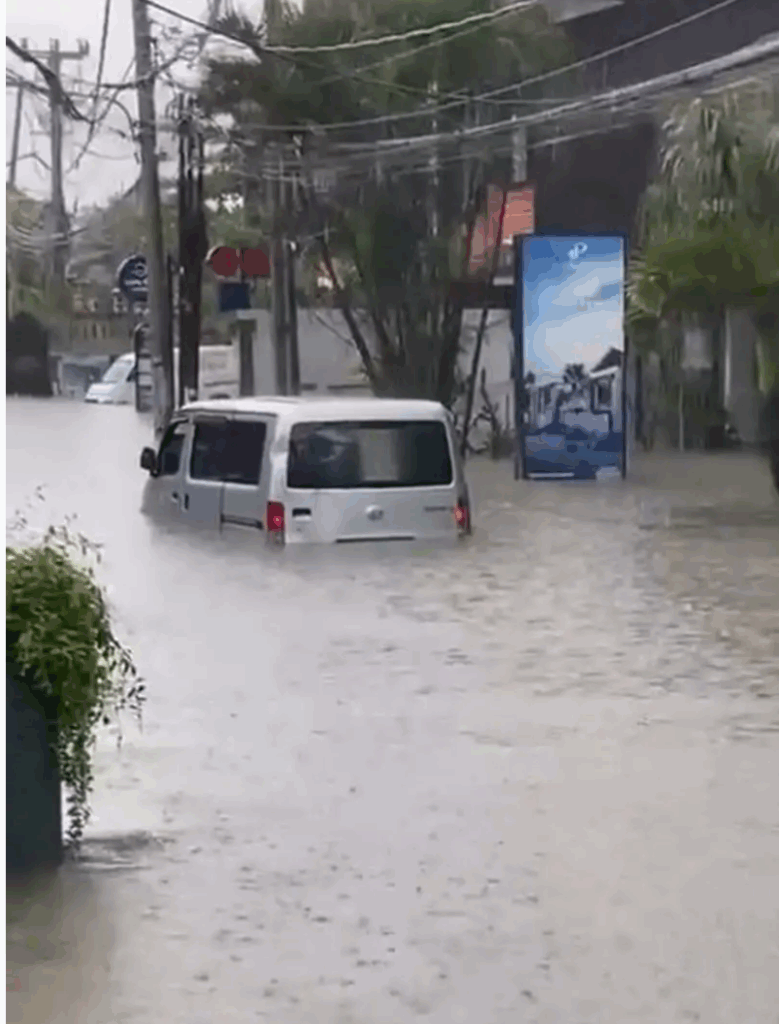
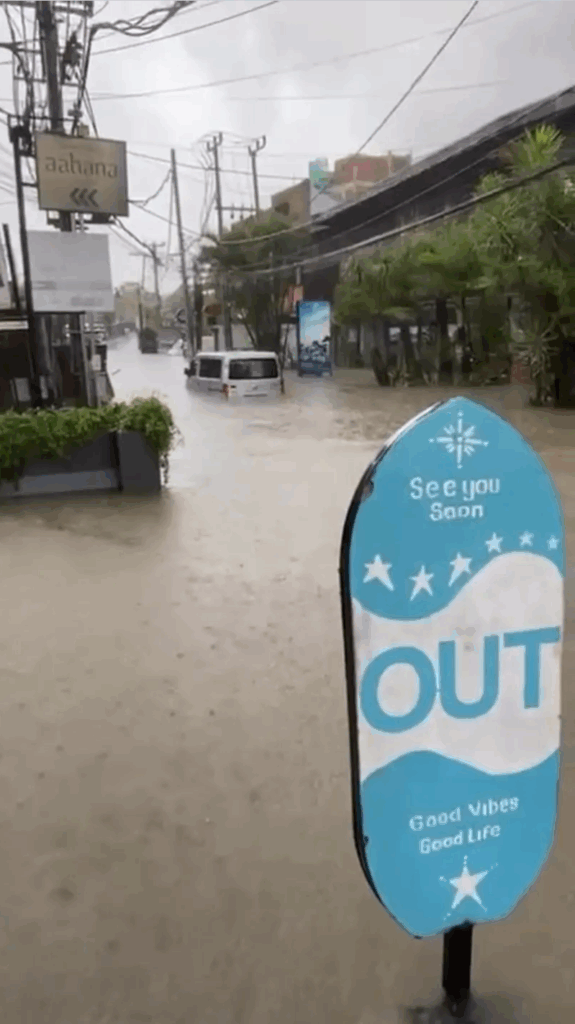
The timing of this project carries particular urgency as Bali rebuilds from devastating 2025 flood damage caused by heavy rainfall and overdevelopment that has destroyed natural water catchment systems, including the traditional rice terrace networks known as Subaks. More recently, the compounding impacts of deforestation across Indonesia and Asia have intensified both flooding and air quality crises, creating cascading environmental disasters. These floods and toxic skies underscore an urgent global truth: we cannot solve 21st-century climate challenges with the same extractive, short-term thinking that created them.
The polycrisis reveals how climate breakdown, air pollution, water system collapse, and cultural erasure are interconnected. When farmers burn rice stubble to save time and money, they’re not making this choice in a vacuum, they’re responding to economic pressures within a global system that has systematically devalued both traditional practices and environmental health. These same economic pressures force many farmers to sell their land to tourism developers and real estate speculators, converting productive rice terraces into hotels and villas that further destroy water catchment systems. Design must engage with this entire ecology of crisis, not simply propose technical fixes. Our kinship exploration looks at alternative intersections where design can actively engage in regenerative practices, transforming waste into a value through cross-cultural partnerships, and centring both ecological health and farming livelihoods rather than perpetuating extraction.
Kinship through Rice emerged from the convergence of lifelong relationship with Indonesia and design anthropological inquiry. My deep, sustained connections with Indonesia and its international design community span decades, not as a researcher parachuting in, but as someone whose life has been woven into these landscapes and relationships. During my PhD research, I met Pak Chakra (The story of “Spirit of the Hibiscus”1) whose rice field stories opened new dimensions of understanding about what rice cultivation holds beyond agriculture: kinship, cosmology, ecological wisdom, and material possibility. These conversations became foundational, revealing how Balinese cosmology positions meaningful knowledge as something that emerges through sustained relationship rather than extractive observation. During 2024-2025, our collective had a series of online discussions with Bradley T. Gardner and his educational team at Begawan https://begawan.org/education/ that contributed to our thinking and ways we can collaborate with living rice communities that will be invaluable for the next stages of this project and our materials start-up.
This relational foundation, built over years, grounded in reciprocity and trust, is what makes kinship-centred research possible. From a Western perspective, this approach also connects to a distinguished lineage of Western design thinkers who recognised Bali as a generative site for understanding systemic design and cultural wisdom. As a Westerner, I bridge two worlds and draw upon the working definition of sustainability that emerges directly from Buckminster Fuller’s systems thinking and geodesic explorations in Bali during the 1969 ‘Champuhan 12 gatherings’, encounters that planted seeds for his student Michael Ben-Eli’s dynamic equilibrium model (Ben-Eli, 2015), which encompasses material, economic, life, social, and spiritual domains. Collectively, we recalibrate this to the current context.
Our kinship-centered research represents the next evolution of this lineage, now supported by the British Council’s Connection through Culture (CTC) 2024 program. However, where Fuller and his contemporaries came to Bali to learn systems thinking, we approach this landscape as a site of sacred intervention in regenerative design practice, working from within relational networks rather than observing from outside. This positioning enables genuine translation between Indonesian principles like ‘Gotong Royong‘ (working together for the common good), Balinese wisdom of ‘Tri Hita Karana‘ (three causes of wellbeing), and emerging frameworks for Planetary Design Futures. Our arts-led research meets environmental action through collaborative engagement with local knowledge systems, addressing post-harvest rice waste not as a technical problem to solve, but as an invitation to reimagine relationships between materials, communities, and ecosystems. This approach makes our work both academically rigorous and culturally authentic; pluriversal in its recognition that multiple ways of knowing must shape sustainable futures.
- Boyer, B.(2020) The story of ‘The Spirit of the Hibiscus’; worldmaking activities from Bali, in Leitão, R., Noel, L. and Murphy, L. (eds.), Pivot 2020: Designing a World of Many Centers – DRS Pluriversal Design SIG Conference, 4 June, held online. https://doi.org/10.21606/pluriversal.2020.030 ↩︎
artisan canang as method colour cooking utensil cultural probes culture Dewi Sri elders farmers fieldwork food aesthetics ITB students living systems framework Making kin nasi padang plants prototypes rats regenerative design Relational knowledge rice Rice godess rice husk rice relations rice straw soil as method soil life subak tiny beings warm data weaving women